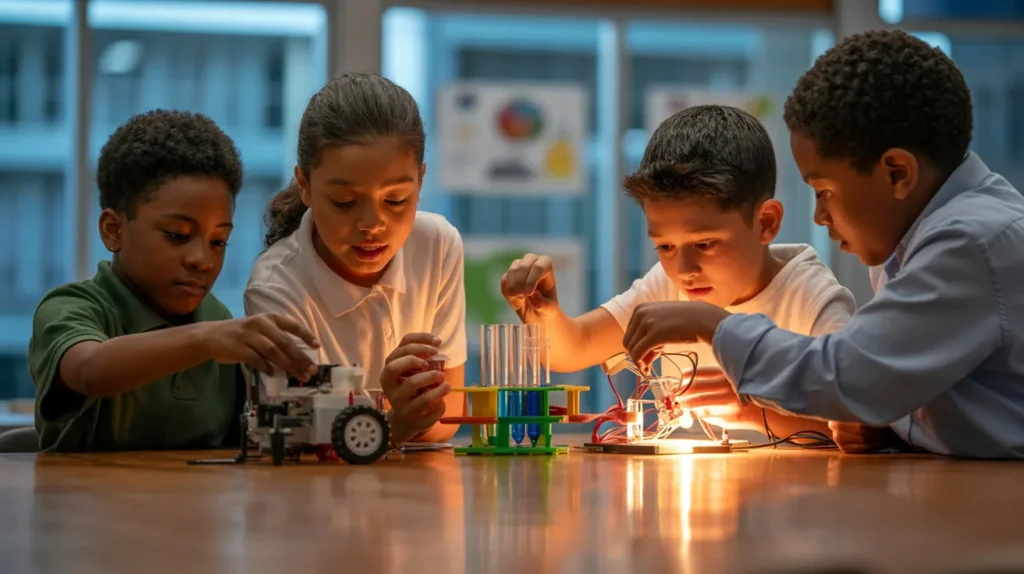
In a world where digital distractions often overshadow genuine curiosity, STEM kits have emerged as a beacon for parents and educators eager to reignite the spark of discovery in young minds. These kits are not mere toys; they are gateways to a universe where science, technology, engineering, and mathematics converge in the most engaging ways. Imagine your child, eyes wide with wonder, as they assemble a motorized fan or construct a working circuit, all from the comfort of home. The tactile experience of turning abstract concepts into tangible creations fosters a deeper understanding and appreciation of the world around them.
But the benefits extend beyond just knowledge acquisition. STEM kits cultivate critical thinking, problem-solving, and creativity – skills that are indispensable in today’s rapidly evolving world. As students manipulate components, troubleshoot issues, and iterate on their designs, they develop a mindset that embraces challenges and seeks innovative solutions. This hands-on approach not only makes learning enjoyable but also ensures that the lessons learned are retained and applied in real-world scenarios.
Moreover, the collaborative nature of many STEM kits encourages teamwork and communication. When students work together to solve problems, they learn to share ideas, listen actively, and build upon each other’s strengths. These interpersonal skills are vital for success in both academic and professional settings. In essence, STEM kits offer more than just an educational experience; they provide a holistic approach to developing well-rounded individuals ready to tackle the complexities of the future.
The Transformative Power of Hands-On Learning
Traditional classroom settings often emphasize rote memorization and passive learning, where students absorb information without actively engaging with the material. In contrast, hands-on learning through STEM kits immerses students in the learning process, making them active participants in their education. This active involvement leads to a deeper understanding of scientific principles and fosters a genuine interest in the subject matter.
Consider the simple act of building a model bridge. As students select materials, measure dimensions, and test the structure’s strength, they apply concepts from physics and engineering in a practical context. This experiential learning solidifies theoretical knowledge and demonstrates its real-world applications. The satisfaction derived from seeing a self-built project function successfully boosts confidence and motivates further exploration.
Furthermore, hands-on learning caters to various learning styles. Kinesthetic learners, who thrive on physical activity, find STEM kits particularly beneficial. Visual learners can grasp concepts through diagrams and models, while auditory learners can engage in discussions and explanations. By accommodating diverse learning preferences, STEM kits ensure that every student has the opportunity to succeed and excel.
Bridging the Gap Between Theory and Practice
One of the most compelling aspects of STEM kits is their ability to bridge the often-perceived gap between theoretical knowledge and practical application. In many educational settings, students learn scientific concepts in isolation, without understanding how these ideas manifest in the real world. STEM kits address this disconnect by providing tangible experiences that bring abstract concepts to life.
For instance, a chemistry kit might include experiments that demonstrate chemical reactions, allowing students to witness firsthand the principles they’ve studied in textbooks. Similarly, an engineering kit might involve constructing a simple machine, illustrating the mechanics behind everyday devices. These hands-on experiences not only reinforce theoretical knowledge but also inspire students to pursue further studies in STEM fields.
Moreover, by engaging in these practical activities, students develop a sense of ownership over their learning. They become inventors, problem-solvers, and creators, taking pride in their ability to apply knowledge to real-world challenges. This empowerment fosters a lifelong love of learning and a desire to continue exploring the vast expanse of scientific discovery.
Fostering Critical Thinking and Problem-Solving Skills
At the heart of STEM education lies the development of critical thinking and problem-solving abilities. STEM kits are designed to challenge students to think analytically, make decisions, and solve complex problems. As students encounter obstacles during their projects, they learn to approach challenges methodically, test hypotheses, and iterate on their designs.
For example, when a student assembles a circuit that doesn’t work as expected, they must troubleshoot the issue by checking connections, verifying components, and considering alternative solutions. This process hones their analytical skills and teaches perseverance in the face of failure. The ability to navigate setbacks and find solutions is a crucial skill that extends beyond the realm of science and is applicable in all areas of life.
Additionally, the open-ended nature of many STEM kits encourages creativity. Students are not merely following instructions; they are given the freedom to experiment, modify designs, and explore new possibilities. This creative freedom fosters innovation and allows students to express their unique ideas and perspectives, further enhancing their problem-solving capabilities.
Encouraging Collaboration and Communication
In today’s interconnected world, collaboration and communication are essential skills. STEM kits provide an excellent platform for students to develop these competencies. Many projects require teamwork, where students must share responsibilities, delegate tasks, and work towards a common goal.
Through collaboration, students learn to appreciate diverse viewpoints, negotiate solutions, and resolve conflicts constructively. These experiences mirror real-world scenarios where teamwork is often necessary to achieve success. Effective communication is also emphasized, as students must articulate their ideas, explain their reasoning, and present their findings to others.
Moreover, working in groups fosters a sense of community and belonging. Students build relationships, support each other’s learning, and celebrate collective achievements. These social interactions enhance the overall learning experience and contribute to the development of interpersonal skills that are vital in both academic and professional environments.
Inspiring Future Innovators
STEM kits serve as a catalyst for inspiring the next generation of innovators and leaders. By providing students with the tools and opportunities to explore science and technology, these kits ignite a passion for discovery and invention. Many students who engage with STEM kits develop an interest in pursuing careers in STEM fields, ranging from engineering and computer science to environmental science and medicine.
Real-world examples abound of individuals who began their journeys with hands-on STEM experiences. For instance, programs like the Astrobiology STEM Activation Program have introduced young students to the wonders of space science, sparking curiosity and ambition. Similarly, initiatives like Qualcomm’s “Thinkabit Labs” have provided middle school students with engineering lessons and opportunities to craft wearable inventions, emphasizing the importance of early exposure to STEM education.
These programs demonstrate the profound impact that hands-on learning can have on shaping future careers. By nurturing curiosity and providing practical experiences, STEM kits empower students to envision themselves as scientists, engineers, and innovators, ready to tackle the challenges of tomorrow.
Integrating STEM Kits into the Curriculum
To maximize the benefits of STEM kits, it’s essential to integrate them thoughtfully into the educational curriculum. Educators can align STEM kit activities with learning objectives, ensuring that each project reinforces key concepts and skills. For example, a physics kit might be used to illustrate principles of motion and energy, complementing classroom lessons on these topics.
Moreover, integrating STEM kits across various subjects enhances interdisciplinary learning. A project that combines elements of science, technology, engineering, and mathematics allows students to see the interconnectedness of these disciplines and understand how they work together to solve complex problems. This holistic approach fosters a deeper appreciation of the relevance and application of STEM in everyday life.
Additionally, incorporating STEM kits into after-school programs, summer camps, and community workshops extends learning opportunities beyond the classroom. These settings provide a relaxed environment where students can explore STEM concepts at their own pace, collaborate with peers, and engage in creative projects that might not be feasible during regular school hours.
Making STEM Accessible to All Students
Ensuring that all students have access to STEM education is crucial for fostering an inclusive and equitable learning environment. STEM kits can play a significant role in this endeavor by providing resources that are adaptable to various learning needs and settings. Kits designed for different age groups, skill levels, and interests ensure that every student has the opportunity to engage with STEM concepts in a meaningful way.
Furthermore, many STEM kits are designed to be affordable and accessible, making them suitable for use in diverse educational contexts. Schools, libraries, and community centers can utilize these kits to offer hands-on learning experiences to students who might not have access to specialized STEM programs. By democratizing access to quality STEM education, these kits contribute to closing the achievement gap and promoting educational equity.
Incorporating STEM kits into home learning environments also empowers parents to actively participate in their children’s education. Parents can engage with their children in building projects, discussing scientific concepts, and fostering a love for learning. This involvement strengthens the parent-child bond and reinforces the importance of education in the family unit.