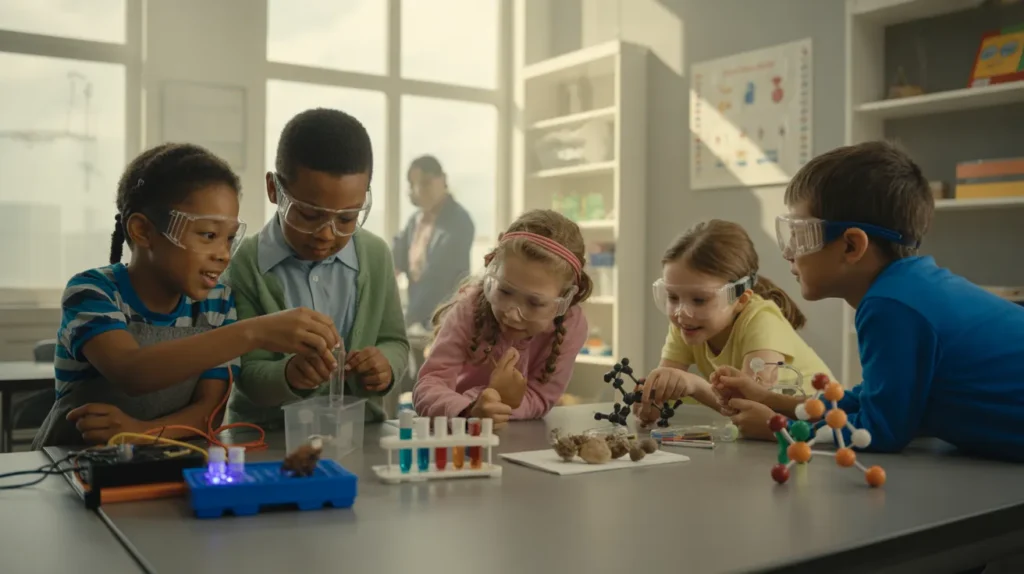
Imagine a classroom where students’ eyes light up with curiosity, where the air buzzes with excitement as young minds delve into the wonders of science. This isn’t a distant dream – it’s the transformative power of hands-on science kits in action. In regions like Madagascar, where educational resources are often limited, these kits are not just tools; they are gateways to a brighter, more engaging future for students.
The Power of Hands-On Learning
Traditional teaching methods, while foundational, often fail to captivate the innate curiosity of students. Hands-on science kits bridge this gap by allowing students to engage directly with the material world. Instead of passively receiving information, learners actively participate in experiments, making abstract concepts tangible. This active engagement fosters a deeper understanding and retention of scientific principles, turning learning into an adventure rather than a chore.
In Madagascar, where educational infrastructure can be challenging, these kits offer a beacon of hope. They provide an opportunity for students to experience science in a practical, engaging manner, regardless of their school’s resources. The tactile nature of these kits ensures that learning is not just theoretical but experiential, making science accessible and exciting for all.
Enhancing Critical Thinking and Problem-Solving Skills
Hands-on science kits do more than teach scientific facts – they cultivate critical thinking and problem-solving abilities. As students manipulate materials, observe outcomes, and troubleshoot issues, they develop a mindset geared towards inquiry and innovation. This process encourages them to ask questions, hypothesize, experiment, and analyze results, mirroring the scientific method in real-world scenarios.
For students in Madagascar, this approach is particularly impactful. The ability to think critically and solve problems equips them with skills that transcend the classroom, preparing them for challenges in various aspects of life. These skills are essential in a rapidly changing world, where adaptability and innovation are key to success.
Fostering Collaboration and Communication
Many hands-on science kits are designed for group activities, promoting collaboration among students. Working together on experiments encourages teamwork, communication, and the sharing of ideas. These interactions not only enhance the learning experience but also build social skills that are vital in both academic and real-world settings.
In Madagascar, where community and cooperation are deeply valued, these collaborative learning experiences resonate strongly. Students learn to work together towards common goals, respecting diverse perspectives and contributing to a collective effort. This sense of community within the classroom mirrors the broader societal values, reinforcing the importance of collaboration in all areas of life.
Making Science Accessible to All
One of the most significant advantages of hands-on science kits is their ability to make science accessible to all students, regardless of their background or resources. These kits often come with all the necessary materials and instructions, allowing students to conduct experiments independently or with minimal supervision. This autonomy fosters confidence and a sense of ownership over their learning.
In Madagascar, where access to quality educational resources can be limited, these kits level the playing field. They ensure that every student, regardless of their school’s funding or location, has the opportunity to engage with science in a meaningful way. This democratization of education is crucial in building a more equitable society.
Supporting Teachers and Enhancing Instruction
Hands-on science kits are not just beneficial for students – they also support teachers in delivering effective instruction. These kits provide educators with ready-to-use materials and structured activities, reducing preparation time and enhancing the quality of lessons. Teachers can focus more on guiding students through the learning process rather than managing logistics.
In Madagascar, where teachers often face challenges such as large class sizes and limited resources, these kits are invaluable. They empower educators to deliver engaging, high-quality science education without the need for extensive additional resources. This support is essential in maintaining teacher morale and effectiveness in the classroom.
Building a Foundation for Future Careers
Exposure to hands-on science education lays the groundwork for future careers in science, technology, engineering, and mathematics (STEM). By engaging with scientific concepts early on, students develop an interest and aptitude for these fields, opening doors to a wide range of career opportunities. This early exposure is crucial in inspiring the next generation of scientists, engineers, and innovators.
In Madagascar, where opportunities in STEM fields are growing, providing students with the tools and experiences to explore these areas is vital. Hands-on science kits serve as a stepping stone, sparking interest and providing the foundational knowledge necessary for pursuing careers in these dynamic fields.
Encouraging Environmental Awareness and Stewardship
Many hands-on science kits include experiments related to the environment, such as studying ecosystems, renewable energy, or the water cycle. These activities not only teach scientific concepts but also foster a sense of environmental responsibility. Students learn about the impact of human activities on the planet and the importance of sustainable practices.
In Madagascar, an island nation rich in biodiversity yet facing environmental challenges, this education is particularly pertinent. By engaging with environmental science through hands-on kits, students develop a deeper understanding of their natural surroundings and the importance of preserving them for future generations.
Integrating Technology for Enhanced Learning
Modern hands-on science kits often incorporate technology, such as sensors, coding platforms, or digital interfaces, to enhance the learning experience. This integration allows students to explore scientific concepts in innovative ways, bridging the gap between traditional and digital learning methods.
In Madagascar, where access to technology can be limited, these kits offer a unique opportunity to introduce students to digital tools in a controlled, educational setting. They provide a foundation for digital literacy, preparing students for a future where technology plays an integral role in all aspects of life.
Taking Action: Bringing Hands-On Science Kits to Madagascar
The benefits of hands-on science kits are clear, but action is needed to bring these resources to students in Madagascar. Educators, organizations, and individuals can collaborate to provide these kits to schools across the country. By supporting initiatives that distribute hands-on science kits, you can play a part in transforming education in Madagascar.
Whether through donations, partnerships, or advocacy, your involvement can make a significant difference. Together, we can ensure that every student in Madagascar has the opportunity to engage with science in a meaningful, hands-on way, paving the path for a brighter, more innovative future.