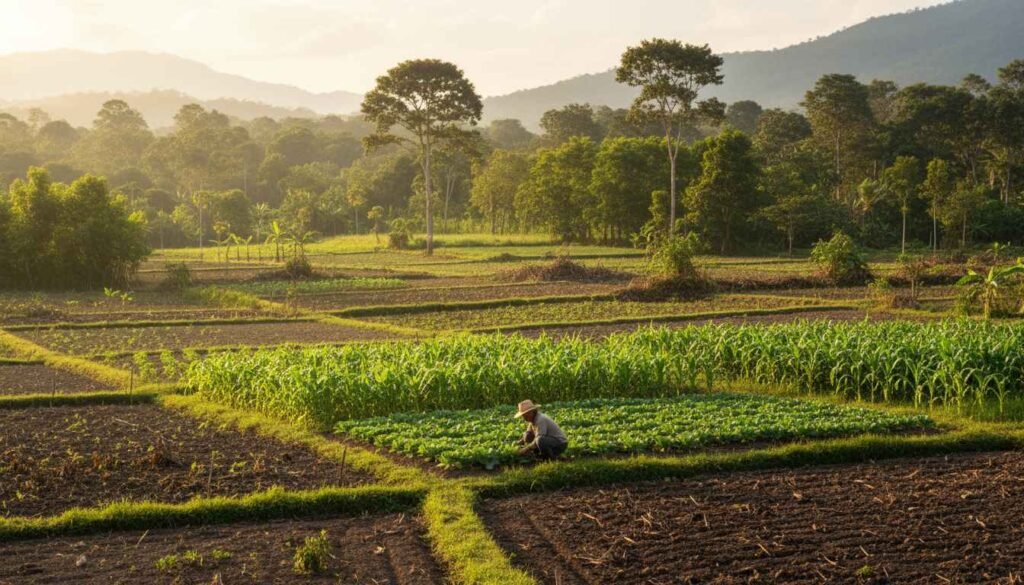
It seems counterintuitive that moving farmland could preserve ecosystems, yet shifting cultivation agriculture has thrived for centuries as a method that balances crop production with forest regeneration. This traditional technique, often misunderstood, involves cultivating a plot of land temporarily before allowing it to naturally regenerate, creating a dynamic cycle of growth and renewal.
What Is Shifting Cultivation Agriculture
Shifting cultivation agriculture, also known as slash-and-burn or rotational farming in certain regions, is a system where farmers clear a section of forest or vegetation, grow crops for a few years, and then move to a new plot. The abandoned land is left fallow, allowing soil fertility to recover naturally. This method is widely practiced in tropical regions where nutrient cycling is critical for sustaining agricultural productivity.
How Does Shifting Cultivation Work
The process begins with selecting a suitable plot, followed by clearing vegetation, typically through cutting and controlled burning. Crops such as maize, millet, or tubers are then cultivated for 2–3 years. Once soil fertility declines, farmers relocate to a new plot, allowing the previous land to regenerate over a fallow period, which can range from 5 to 20 years depending on local conditions and crop intensity.
What Are the Key Advantages
Shifting cultivation agriculture offers multiple benefits. By rotating plots, it reduces the risk of soil degradation and nutrient depletion. The fallow periods encourage biodiversity recovery, providing habitats for wildlife. Moreover, in regions with limited access to chemical fertilizers, this method naturally replenishes soil nutrients, making it a cost-effective and ecologically sustainable practice.
Pro Tip: Integrating leguminous cover crops during the fallow period can accelerate soil fertility restoration and enhance long-term productivity of shifting cultivation plots.
Who Should Consider Shifting Cultivation
This method is particularly suitable for small-scale farmers in tropical regions with access to forested land and minimal mechanized farming tools. Communities that rely on local resources rather than industrial fertilizers find shifting cultivation an effective strategy for sustainable food production. Incorporating modern agroforestry techniques can further optimize yields while preserving environmental balance. For quality tools and supplies that support such practices, FarmTek offers a wide range of agriculture products including garden carts, poly films, and greenhouse equipment.
Potential Drawbacks of Shifting Cultivation
While environmentally sound in traditional contexts, shifting cultivation agriculture has limitations. Excessive population pressure can reduce fallow periods, leading to soil exhaustion. Inappropriate fire management may increase the risk of uncontrolled wildfires. Additionally, this method is less suitable for large-scale commercial farming due to its cyclical nature and land requirements. Policymakers and agricultural planners often need to balance these drawbacks when integrating shifting cultivation into modern agricultural systems.
How Shifting Cultivation Impacts Soil and Biodiversity
Shifting cultivation helps maintain soil fertility through natural nutrient cycling. Burning vegetation releases essential minerals, while fallow periods allow organic matter to accumulate. Biodiversity often benefits as regenerating forests provide diverse habitats for plants and animals. Studies by the Food and Agriculture Organization (FAO) highlight that when practiced responsibly, shifting cultivation can support both ecological resilience and human livelihoods.
Modern Adaptations of Shifting Cultivation
Farmers today increasingly combine traditional shifting cultivation with modern techniques such as contour planting, organic fertilization, and integrated pest management. These adaptations aim to maintain soil health, reduce labor intensity, and increase productivity while staying aligned with environmental standards. Strategic planning ensures the sustainability of this practice even in the face of climate change and increasing land use pressures.
Is Shifting Cultivation Right for Your Farm
Choosing shifting cultivation agriculture requires understanding local land availability, soil characteristics, and community needs. While it is ideal for preserving soil fertility and biodiversity in low-intensity farming regions, it may not be viable in densely populated areas or for highly mechanized commercial farms. Consulting local agricultural guidelines and experts is crucial before implementing this system to ensure optimal results and ecological responsibility.