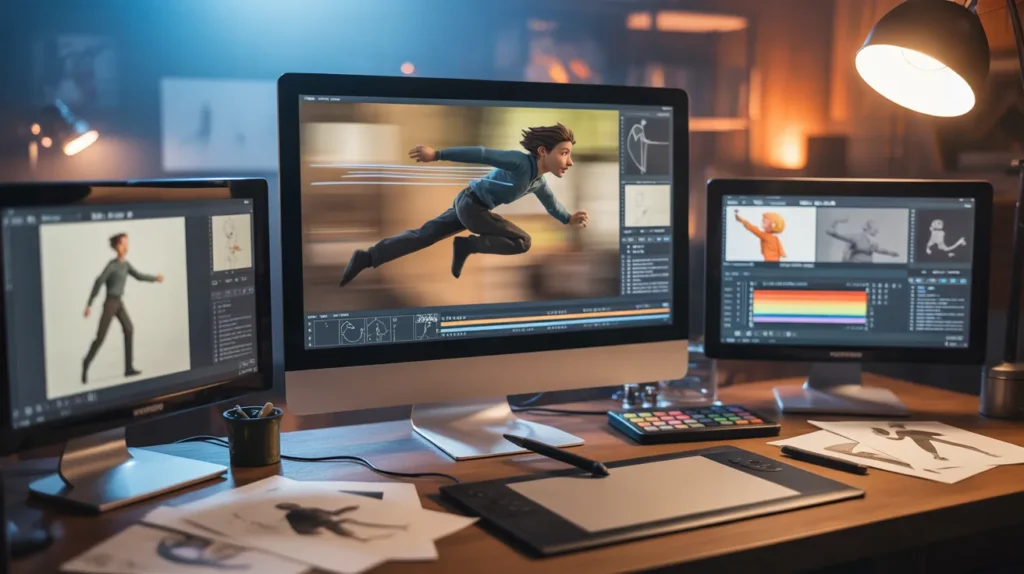
In the dynamic world of digital storytelling, animation has emerged as a powerful medium to captivate audiences and convey complex ideas with clarity and creativity. Whether you’re an aspiring animator or a seasoned professional aiming to refine your craft, mastering the art of smooth, engaging, and professional motion is essential. This comprehensive guide delves into the core principles, techniques, and tools that will elevate your animation skills to new heights.
Understanding the Fundamentals of Animation
At the heart of every compelling animation lies a deep understanding of its fundamental principles. These foundational concepts, established by Disney animators Frank Thomas and Ollie Johnston in their seminal work “The Illusion of Life,” serve as the bedrock for creating lifelike and engaging animations. The twelve principles – such as squash and stretch, anticipation, and timing – are not mere guidelines but essential tools that breathe life into static images.
Squash and stretch, for instance, imparts a sense of weight and flexibility to objects, making them appear more dynamic and realistic. Anticipation prepares the audience for an upcoming action, setting the stage for a more impactful movement. Timing dictates the speed of actions, influencing the perceived weight and emotion of the scene. Mastery of these principles allows animators to craft sequences that resonate with viewers on a visceral level.
Incorporating these principles into your workflow involves more than theoretical knowledge; it requires consistent practice and application. By analyzing classic animations and recreating scenes, you can internalize these concepts and develop an intuitive sense for their application. Additionally, seeking feedback from peers and mentors can provide valuable insights, helping you refine your techniques and avoid common pitfalls.
Mastering the Art of Smooth Motion
Achieving smooth motion in animation is a delicate balance between technical skill and artistic intuition. One of the most effective methods to ensure fluidity is through the use of keyframes and inbetweens. Keyframes define the start and end points of a movement, while inbetweens fill the gaps, creating a seamless transition between poses. This process, known as inbetweening or tweening, is crucial for producing animations that flow naturally.
Modern animation software offers tools that simplify the inbetweening process, allowing animators to focus on the creative aspects of their work. However, understanding the underlying principles remains paramount. For instance, paying attention to the spacing between keyframes can influence the acceleration and deceleration of movements, contributing to the overall smoothness. Additionally, subtle adjustments to timing can enhance the believability of actions, making them appear more lifelike.
Beyond technical considerations, the aesthetic quality of motion plays a significant role in viewer engagement. Smooth animations are not just about fluid transitions; they also involve thoughtful composition and timing that align with the narrative’s emotional tone. By aligning the rhythm of movement with the story’s pacing, animators can create sequences that resonate emotionally with the audience.
Enhancing Engagement Through Storytelling
Animation is not merely about movement; it’s about telling a compelling story that captivates the audience. Engaging animations often feature well-developed characters and narratives that evoke emotions and provoke thought. To achieve this, it’s essential to focus on character development, dialogue, and the integration of visual elements that support the story’s themes.
Character design plays a pivotal role in storytelling. Distinctive features, expressions, and movements can convey a character’s personality and emotions without the need for words. Coupled with effective dialogue and sound design, these elements create a rich narrative experience. Moreover, the environment in which the story unfolds should complement the narrative, providing context and enhancing the overall atmosphere.
Incorporating storytelling techniques into your animations involves careful planning and consideration. Storyboarding is an invaluable tool in this process, allowing you to map out scenes, determine pacing, and visualize the flow of the narrative. By aligning each frame with the story’s objectives, you ensure that every movement and transition serves to advance the plot and engage the audience.
Utilizing Advanced Animation Techniques
To stand out in the competitive field of animation, it’s essential to go beyond basic techniques and explore advanced methods that add depth and sophistication to your work. Techniques such as motion capture, 3D modeling, and particle effects can elevate the quality of your animations, providing a more immersive experience for the viewer.
Motion capture technology allows for the recording of real human movements, which can then be applied to digital characters. This results in animations that closely mimic real-life actions, adding a layer of realism to your work. Similarly, 3D modeling enables the creation of complex environments and characters that can be manipulated from multiple angles, offering greater flexibility and creativity.
Particle effects, such as smoke, fire, and water, can add dynamic elements to your animations, enhancing their visual appeal. These effects require a solid understanding of physics and fluid dynamics to achieve convincing results. By mastering these advanced techniques, you can create animations that are not only visually stunning but also technically impressive.
Choosing the Right Tools and Software
The selection of tools and software plays a crucial role in the animation process. The right tools can streamline workflows, enhance creativity, and improve the quality of the final product. Popular animation software includes Adobe Animate, Toon Boom Harmony, and Blender, each offering unique features tailored to different aspects of animation.
Adobe Animate is renowned for its vector-based animation capabilities, making it ideal for 2D animations and interactive content. Toon Boom Harmony offers a comprehensive suite of tools for both 2D and 3D animation, catering to professionals in the industry. Blender, a free and open-source software, provides robust features for 3D modeling, animation, and rendering, making it accessible to beginners and professionals alike.
When choosing animation software, consider factors such as the type of animation you wish to create, your budget, and your level of expertise. Many software options offer trial versions, allowing you to explore their features before making a commitment. Additionally, online tutorials and communities can provide support and guidance as you familiarize yourself with new tools.
Building a Strong Portfolio
A well-curated portfolio is essential for showcasing your animation skills and attracting potential clients or employers. Your portfolio should highlight your best work, demonstrating a range of techniques and styles. It’s important to include a variety of projects that showcase your versatility and ability to adapt to different styles and requirements.
Each piece in your portfolio should be accompanied by a brief description that outlines the project’s objectives, your role, and the techniques employed. This provides context for viewers and allows them to appreciate the depth of your work. Additionally, consider including a demo reel that compiles your best animations into a concise and engaging presentation.
Regularly updating your portfolio with new work ensures that it remains current and reflective of your evolving skills. Engaging in personal projects, collaborations, and freelance opportunities can provide fresh material for your portfolio and expand your professional network.
Seeking Feedback and Continuous Improvement
Animation is an ever-evolving field, and continuous learning is key to staying relevant and improving your craft. Seeking constructive feedback from peers, mentors, and industry professionals can provide valuable insights and highlight areas for improvement. Participating in animation communities, both online and offline, allows you to exchange ideas, share experiences, and learn from others.
Attending workshops, conferences, and seminars can also enhance your knowledge and skills. These events offer opportunities to learn from experts, discover new techniques, and stay updated on industry trends. Additionally, engaging in collaborative projects can expose you to different perspectives and approaches, fostering growth and innovation.
Embracing a mindset of lifelong learning and adaptability ensures that you continue to evolve as an animator, producing work that resonates with audiences and stands out in the industry.
Supporting Public Education Through Animation
Animation serves as a powerful tool in supporting public education, offering innovative ways to engage students and enhance learning experiences. By integrating animation into educational curricula, educators can present complex concepts in a more accessible and engaging manner, catering to diverse learning styles.
Animated content can simplify abstract ideas, making them more tangible and easier to understand. For instance, scientific processes, historical events, and mathematical theories can be visualized through animation, aiding comprehension and retention. Moreover, animation can foster creativity and critical thinking skills, encouraging students to explore and express ideas in new ways.
Supporting public education through animation involves collaboration between educators, animators, and policymakers to develop resources that align with educational standards and objectives. By investing in animated educational content, we can create inclusive learning environments that inspire and empower students.
By embracing continuous learning and practical experience, you can refine your video production skills and stand out in the competitive fields of film, media, and advertising. Explore workday vertex education to enhance your professional journey.