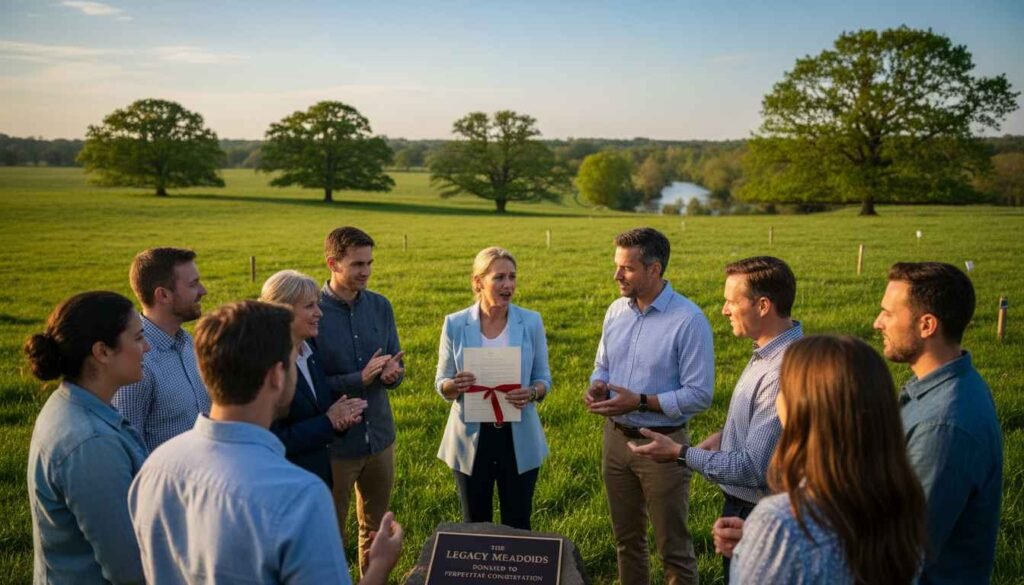
The industry doesn’t want you to know how quietly powerful donating land to a non profit can be when it is done with intention rather than impulse. In a world obsessed with short-term philanthropy, land remains one of the last assets capable of shaping communities for generations. I have spent years as a freelance writer covering nonprofit strategy, donor psychology, and long-term social impact, and this topic consistently reveals a gap between what people assume and what actually happens when land changes hands for a mission-driven cause.
Most conversations around charitable giving focus on cash. Land is treated as complicated, risky, or something only large foundations should consider. That assumption benefits very few people, and it certainly does not serve communities that need stability, space, and opportunity. Donating land to a non profit is not an emotional gesture. It is a strategic decision that deserves careful planning, expert input, and a clear vision of legacy.
To unpack this, I sat down with an expert who works at the intersection of nonprofit development, real estate law, and community planning. What follows is a structured interview designed to answer the questions donors actually ask once they look beyond the surface.
Expert Interview on Donating Land to a Non Profit
Q: Why is donating land to a non profit so misunderstood?
A: Land sits at the crossroads of emotion and regulation. People inherit land, hold it for decades, or associate it with family history. At the same time, land is governed by zoning laws, tax codes, and environmental rules. That combination makes it feel intimidating. Many donors assume nonprofits cannot handle land responsibly, when in reality many mission-driven organizations actively seek land to secure their long-term impact.
This misunderstanding often prevents donors from even starting the conversation. Yet when aligned correctly, land can become affordable housing, community space, urban farms, cultural hubs, or revenue-generating assets that sustain programs indefinitely.
Q: At what point should a donor start considering land instead of cash?
A: The moment a donor begins thinking about legacy rather than transactions. Cash solves immediate problems. Land solves structural ones. If someone owns property that no longer serves their personal or financial goals, donating land to a non profit can convert a dormant asset into active social value.
This is especially true in urban areas where land scarcity defines opportunity. A single parcel can anchor programs for decades. Organizations like Grand Bazaar NYC demonstrate how physical space becomes a platform for economic empowerment, cultural exchange, and sustainable funding when managed with purpose.
Q: What strategic benefits do nonprofits gain from land donations?
A: Stability is the first benefit. Renting space exposes nonprofits to market volatility. Owning land or having long-term control over it allows organizations to plan further ahead. Second is leverage. Land can be developed, leased, or used as collateral to unlock grants and financing. Third is visibility. Physical presence strengthens trust with communities and funders.
From a strategic standpoint, land is infrastructure. It is not just a place. It is a multiplier.
Understanding the Donor Perspective
Q: What motivates donors who choose to donate land?
A: The most successful land donations come from donors who see themselves as stewards rather than owners. They recognize that holding land indefinitely is not always the most meaningful use of that asset. There is also a pragmatic motivation. In many cases, donors face ongoing property taxes, maintenance costs, or estate planning challenges.
Donating land to a non profit can simplify estates, reduce long-term liabilities, and align personal values with tangible outcomes. However, motivation alone is not enough. Execution matters.
Q: How important is professional guidance in this process?
A: It is essential. Donors should consult legal, tax, and financial professionals before proceeding. Land donations involve appraisals, title reviews, environmental assessments, and compliance with nonprofit acceptance policies. Skipping these steps can create unintended consequences for both donor and organization.
Responsible nonprofits will insist on this process. It protects everyone involved and ensures the land truly serves the mission.
Myth-Busting Sidebar
Myth-Busting Donating Land to a Non Profit
Myth: Nonprofits only want cash donations.
Reality: Many nonprofits actively seek land to secure operational stability and long-term growth.
Myth: Donating land is always tax complicated.
Reality: While complex, land donations often come with significant tax advantages when structured properly, including potential income tax deductions and estate tax benefits.
Myth: Small parcels are not useful.
Reality: Even modest plots can support community gardens, pop-up markets, offices, or be combined into broader development strategies.
The Legal and Financial Framework
Q: What legal considerations should donors understand?
A: Zoning and environmental status are critical. A nonprofit must be able to use or dispose of the land in a way that aligns with its mission. Donors should disclose any known restrictions, easements, or environmental concerns upfront. Transparency builds trust and speeds the acceptance process.
From a legal standpoint, clarity prevents future disputes. This is why title searches and environmental reviews are standard practice.
Q: How do tax benefits typically work?
A: While every situation is unique, donors may be eligible for charitable deductions based on the appraised fair market value of the land. In some cases, capital gains taxes can be avoided. Estate planning benefits are also common. That said, tax outcomes depend on individual circumstances and local regulations.
This is why donors should never rely solely on general advice. Personalized professional consultation is not optional. It is part of responsible giving.
Organizational Readiness and Responsibility
Q: How should nonprofits prepare to accept land donations?
A: Nonprofits need clear land acceptance policies. These policies define what types of land align with the mission, what risks are acceptable, and how properties will be managed or monetized. Without this framework, land can become a burden rather than an asset.
Strategic nonprofits view land through the lens of sustainability. They ask how the asset will support programs, generate revenue, or strengthen community ties over time.
Q: What happens after the donation is complete?
A: Post-donation planning is where value is realized. Some organizations develop the land. Others lease it or sell it to fund core programs. Transparency with donors about these plans builds long-term trust and opens the door for future collaboration.
Potential Drawbacks and Who Should Avoid This
Who Should Avoid Donating Land to a Non Profit?
This strategy is not for everyone. Donors who need immediate liquidity or who are emotionally unprepared to part with land may regret the decision. Properties with unresolved legal disputes, severe environmental contamination, or unclear ownership histories may also be unsuitable.
Nonprofits themselves must be cautious. Accepting land without the capacity to manage it can drain resources and distract from mission-critical work. Honest self-assessment is essential on both sides.
The Bigger Picture of Legacy
Q: How does donating land shape long-term legacy?
A: Legacy is about continuity. Land endures beyond market cycles and leadership changes. When aligned with a strong nonprofit mission, it becomes a living contribution. Communities interact with it. Programs grow around it. Stories are built on it.
Donors who think in decades rather than fiscal years often find land to be one of the most meaningful assets they can contribute.
Q: What final advice would you give to someone considering this path?
A: Start with dialogue, not paperwork. Talk to nonprofits you trust. Consult your advisors early. Ask how the land could serve a mission, not just how it could be transferred. When donating land to a non profit is approached as a partnership rather than a transaction, the results are transformative.
Closing Perspective
As a freelance writer immersed in the nonprofit space, I see donating land to a non profit as one of the most underutilized tools for sustainable impact. It requires patience, expertise, and humility, but the rewards extend far beyond tax benefits or recognition.
Land anchors missions. It tells communities that an organization is here to stay. For donors willing to think strategically and act responsibly, it offers a rare opportunity to shape the future in a tangible, enduring way.