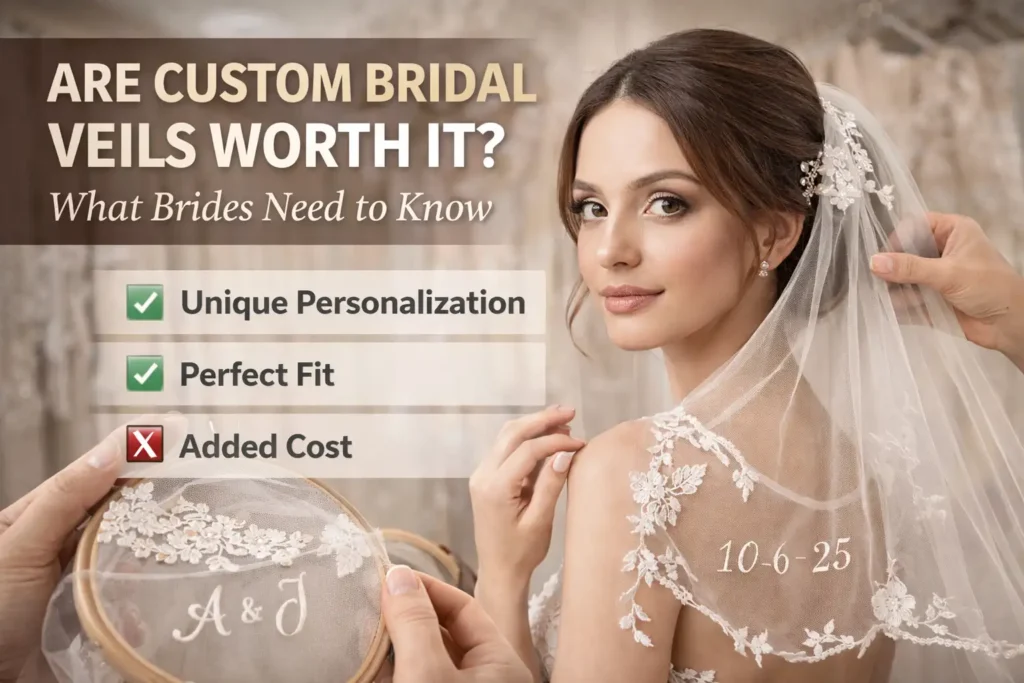
Custom bridal veils have become a major point of interest among brides who want something personal, thoughtful, and aligned with the rest of their wedding look. For some, a tailored veil is the missing piece that ties the dress to the ceremony space, the theme, and the overall mood. For others, it feels like an optional luxury. Understanding when a custom veil makes sense, and what to expect from the process, helps brides make a confident decision.
What “Custom” Means in Bridal Veils
Custom veils generally fall into three categories. A fully bespoke veil is designed from scratch. Every element is chosen by the bride and executed by an artisan, from tulle type and trimming to embroidery placements and motifs. A semi-custom veil starts with an existing base and modifies details such as length, edging, or embellishment. Made-to-measure veils use fixed designs that are adjusted to match the bride’s dress measurements.
The level of involvement varies. Some brides request specific tulle weights to match a dress fabric, while others choose personalised wedding veils for brides who want heritage lace, hand-stitched monograms, cathedral-length hems scaled to the train, or colored embroidery that ties into cultural traditions. Customisation also addresses comfort: for example, matching veil weight to hairstyle support so the comb does not pull or tilt during movement.
When Custom Is Worth It
Custom veils solve problems that standard pieces cannot. Brides find bespoke work valuable in several scenarios:
Matching Complex Dresses
Some gowns come with striking architectural lines, irregular hems, colored embroidery, or heavy beading. Ready-made veils rarely pair well with dresses that have strong statements or unconventional shapes. A custom piece can echo key dress elements and produce a cohesive silhouette across the aisle and in photos.
Personal Vision and Symbolic Details
Many brides use their veil to tell a story. Names, wedding dates, religious symbols, family motifs, or cultural patterns can be stitched into the veil discreetly or as a feature design. This transforms the veil into a keepsake rather than a single-use accessory.
Perfect Proportion
Length is not just about height. It is about chair seating during the ceremony, aisle width, and how the veil behaves during the recessional. A trained artisan can scale veil length so the hem rests just beyond a train without creating a tripping hazard, bunching on stairs, or dragging in a field during outdoor ceremonies.
Photographic Impact
Custom pieces make a noticeable difference in portraits. Veils can be designed to catch wind, frame profile shots, or provide shape behind the dress. This explains why photographers frequently favor longer, flowing designs: they give depth to images and help with movement shots.
Benefits of Going Custom
Custom veils provide concrete advantages beyond aesthetics.
Fit and Comfort
A custom veil distributes weight correctly across the comb and tulle so the veil does not flip backward, bend at the comb, or collapse over the bride’s shoulders. This matters during long ceremonies, outdoor events, or church weddings with long aisles.
Unique and Memorable Design
Bespoke work ensures no other bride will wear the same piece. This appeals to brides who value individuality or who want their veil to function as an heirloom.
Alignment With Values
Ethical production, fair labor, and sustainable materials have become priorities for many modern brides. Custom studios that work in-house provide transparency: where materials come from, who makes the veil, and how long it takes to complete.
Ease of Styling
Hair stylists appreciate veils that are built to sit correctly with a specific hair structure, whether it is a low bun, waves, braids, or natural-textured styles. This reduces the risk of slipping during the ceremony or reception.
Points to Consider Before Ordering Custom
Custom veils come with trade-offs that should be considered early in the planning process.
Higher Cost
Labor is the main driver. Hand embroidery, lace edging, or pearl placement can take dozens of hours. Complex cathedral veils may involve more hours than a ready-made gown. Pricing varies widely depending on region, fabric type, and embellishment density.
Longer Timelines
Brides should not expect quick turnaround. Artisan-led studios often request eight to sixteen weeks, with longer windows for advanced embroidery. Rush orders may be possible but often come at a premium.
Limited Last-Minute Adjustments
Once production begins, structural elements such as tulle density or trim width cannot be changed without restarting the veil. This is why early communication is key.
Decision Pressure
Many brides find it harder to commit to design choices than expected. Choosing between ivory and soft white, or selecting motifs, can become a time sink. Studio samples, swatches, and reference photos help reduce decision fatigue.
How to Decide if a Custom Veil Is Right for You
Brides can evaluate their situation using practical criteria:
Dress Style: Highly detailed or unconventional gowns benefit more from custom work than minimalist silhouettes.
Wedding Aesthetic: Formal cathedral weddings, large cultural ceremonies, and editorial-style celebrations often suit bespoke pieces.
Timeline: If the wedding is less than two months away, semi-custom or made-to-measure may be more realistic.
Budget: Brides should assess how much of the accessories budget is reserved for headpieces, hair, and veils.
Priority Level: Some brides truly care about their veil as part of their statement look, while others prefer to focus on jewelry or shoes.
FAQs
Do custom veils work with detachable trains or overskirts?
Yes. Designers can scale veil length and weight to sit cleanly over detachable elements. They will ask for photos and train measurements so the hem clears the overskirt during movement and the recessional. This prevents snagging and helps the bride switch looks without removing the veil.
How far in advance should a bride order a custom veil?
Most studios prefer eight to sixteen weeks, depending on embroidery complexity and availability of materials. Brides planning cultural embroidery, lace matching, or cathedral lengths should allow more time. Rush production may be offered by some ateliers, but it typically increases cost.
Can brides customize the veil comb or attachment?
Yes. Brides can choose between metal combs, plastic combs, hairpins, or headbands based on hairstyle and hair texture. Stylists often prefer metal combs for secure placement during longer ceremonies or outdoor weddings, especially for heavy veils or windy venues.
Are custom veils difficult to travel with?
Not necessarily. Most custom veils can be packed in garment bags or travel tubes and steamed on arrival. Brides flying for destination weddings should ask for folding or storage instructions based on embroidery and trim density to avoid creasing or distortion.
Can a custom veil accommodate cultural or religious requirements?
Yes. Many brides use custom work to comply with modesty expectations, head coverings, fabric opacity, or symbolic motifs. Designers will request specifics during the consultation and may offer swatches to confirm coverage and texture before production begins.